> For the complete documentation index, see [llms.txt](https://docs.botdistrikt.com/llms.txt). Markdown versions of documentation pages are available by appending `.md` to page URLs; this page is available as [Markdown](https://docs.botdistrikt.com/artificial-intelligence/dialogflow/multilanguage-support.md).
# Multilanguage Support
BotDistrikt's platform multilanguage support allows you to train the same intent in different languages.
### Accessing Multilanguage Support
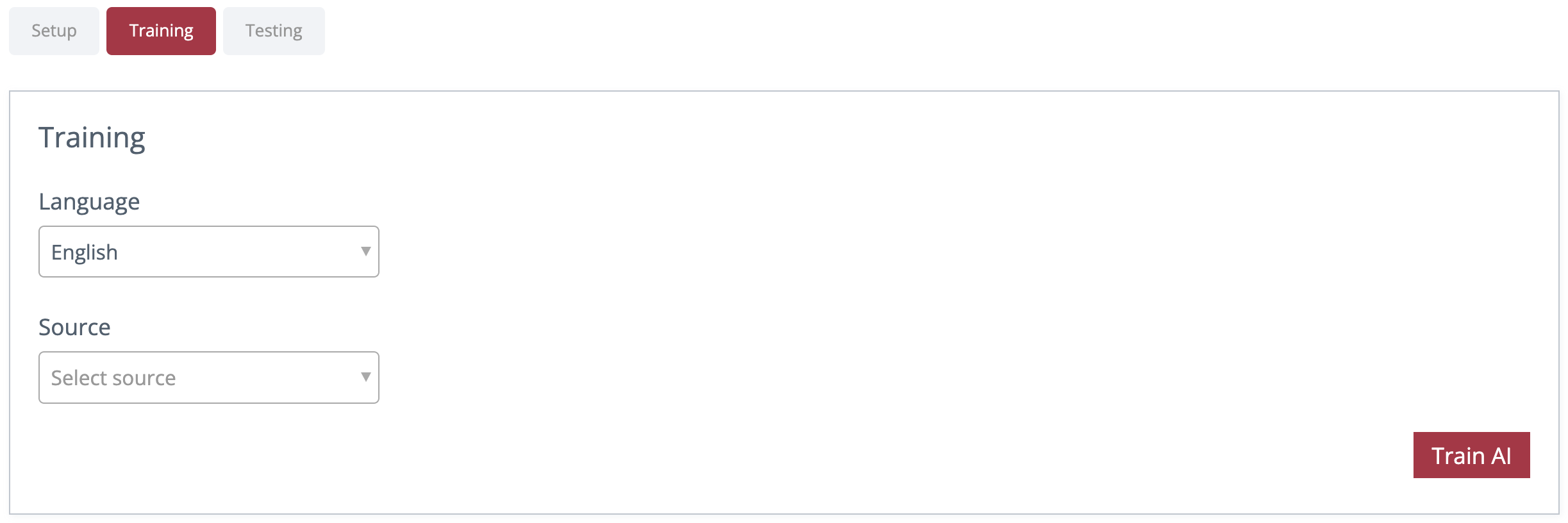
1. Navigate to Integrations > Dialogflow > Training or Testing tab
Language dropdown in Training
Language dropdown in Testing
2. Select a language in the dropdown. The language dropdown is used to deduce intents and entities is based on the user profile's "Language" option.
3. In the Training tab, once a language is selected, you can populate the utterance field with the intents in the respective language selected.
4. In the Testing tab, you can type a message with the keyword in the language of the newly-added intent(s) to test it out.